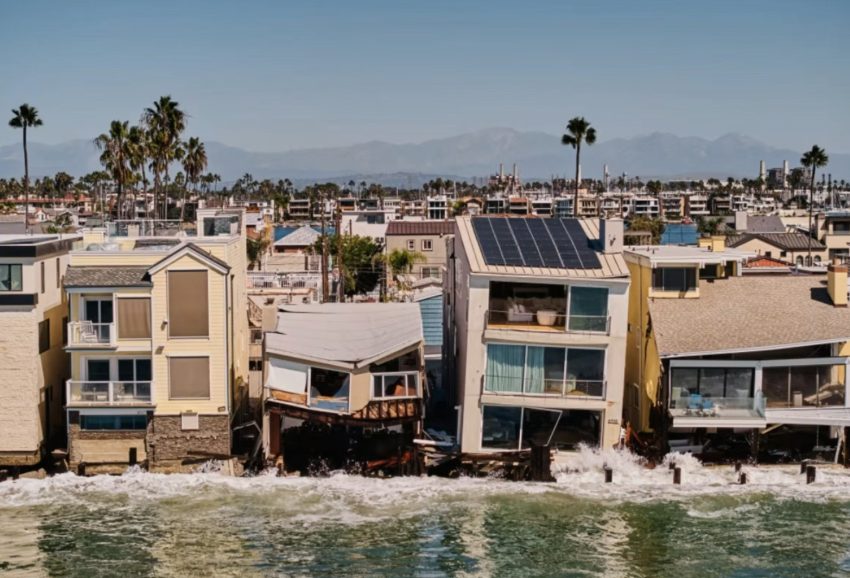
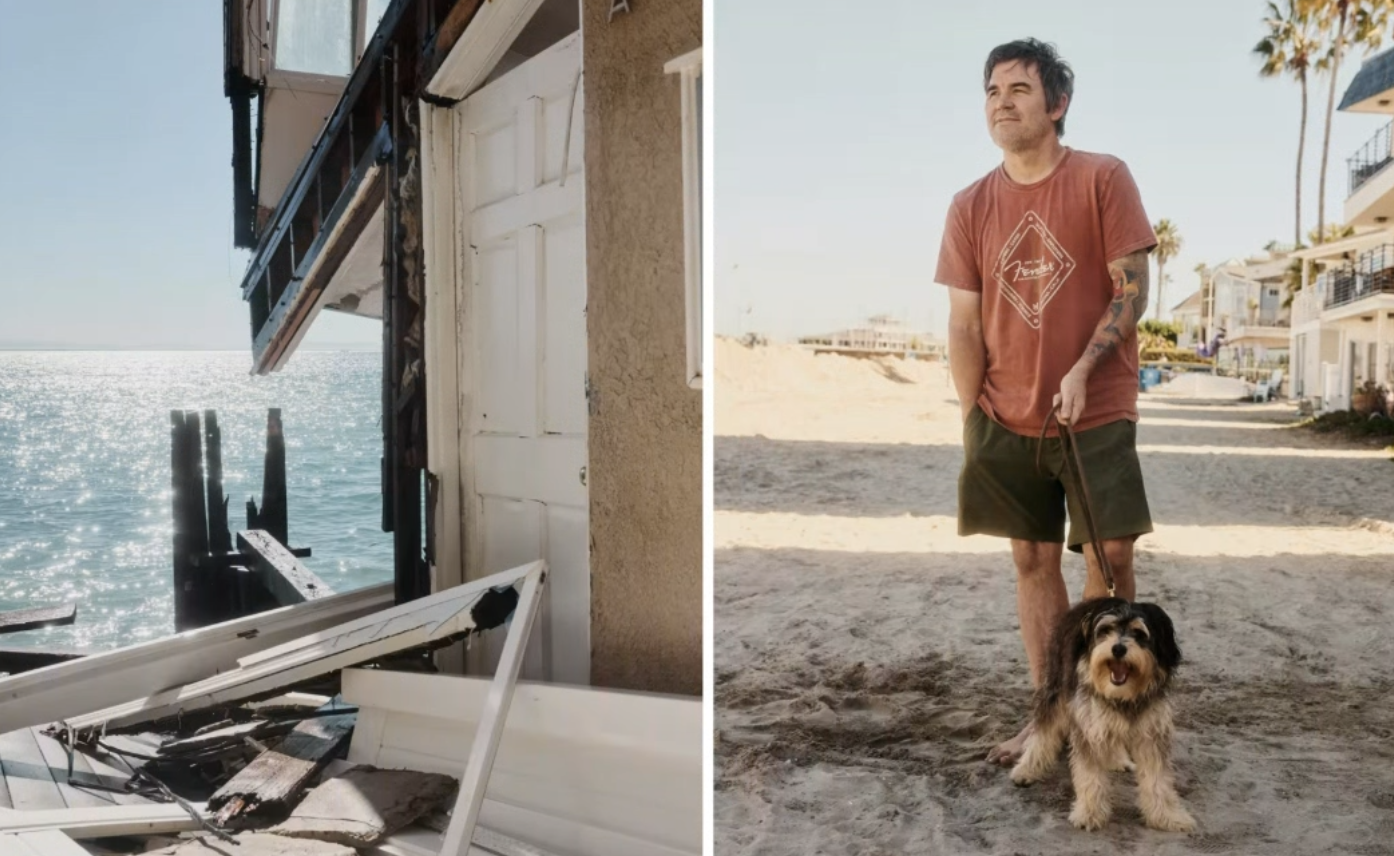
LONG BEACH, Calif. — At approximately 3:30 a.m. on Oct. 9, Shawn Curtis watched an unimaginable disaster unfold around his beachfront apartment in Southern California. The boardwalk outside his two-story building had disappeared, along with the 25-foot stretch of sandy beach that once separated the property from the Pacific Ocean. Seawater was rushing in from multiple directions, and the building had begun tilting toward the water.
Curtis struggled to comprehend the destruction taking place before him. “The doorframe was crooked. The window was crooked, and then I saw a big wave crash,” he recalled during an interview with NBC News on Thursday.
Powerful waves surged as high as the building’s second floor. Residents living across the street described watching seawater pour over the roof of the apartment building Curtis had called home for nine years. He said the crashing surf produced such tremendous noise and force that it woke him and caused his apartment to tremble as though an earthquake had struck.
“We rushed for our lives, but it was clear the house was toast,” Curtis said, referring to himself and his roommate. “It was a foregone conclusion. It was gone.”
Although the most intense phase of El Niño remains several months away, record-breaking king tides and powerful storm surges are already dramatically reshaping vulnerable stretches of Southern California’s coastline.
An exceptionally active hurricane season produced three major storms that battered parts of Hawaii and Mexico earlier this year. The resulting extraordinary ocean conditions have destroyed more than a dozen waterfront homes in Long Beach, washed away boardwalks and damaged sections of the Pacific Coast Highway farther south.
“This is just a little bit of a taste of what we will see in the future,” warned Timu Gallien, a researcher with the Coastal Flood Lab at the University of California, Los Angeles.
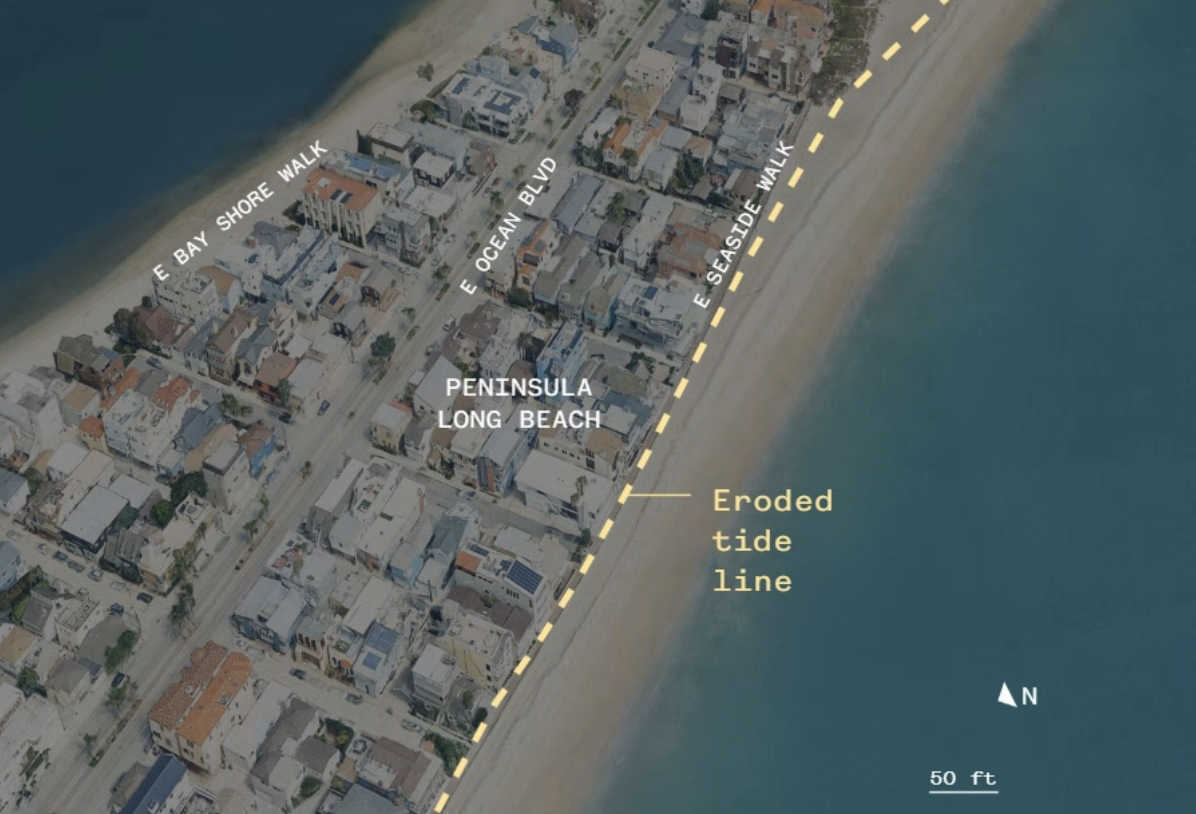
During the previous weekend, destructive waves struck coastal communities stretching from Malibu to San Diego. Neighborhoods in Newport Beach experienced significant flooding, while residents of Long Beach were forced to evacuate properties that had previously been protected by broad sandy beaches and reinforced waterfront walkways.
The destruction occurred unexpectedly during a weekend characterized by sunshine and otherwise calm weather. Neither heavy rainfall nor strong winds preceded the enormous swells that reached Laguna Beach, where part of the Pacific Coast Highway remains closed because sections of the roadway have begun cracking and slipping toward the ocean.
“People don’t realize there was a beach here,” said Dana Marie Lazzareschi, a resident of the Long Beach Peninsula, on Thursday. “These houses aren’t on the water.”
Paradise lost
Lazzareschi moved into her rented home on the peninsula four years ago and quickly became attached to the neighborhood’s diversity and close-knit atmosphere. She recalled friendly neighbors who regularly talked with one another, watched out for nearby households, walked their dogs and cycled along the streets. Residents were also willing to offer assistance whenever someone needed help.
However, watching enormous waves reach the rooftops of nearby buildings on Oct. 9 left her questioning whether remaining in the neighborhood would be possible.
“I definitely wouldn’t buy a home here now,” she acknowledged. “But it really is such a dream.”
Climate scientists and marine researchers have warned for decades that rising global temperatures would contribute to higher sea levels, making coastal flooding increasingly frequent and destructive. This year, those longstanding threats are converging with an El Niño event that forecasters expect could become the most powerful ever recorded.
El Niño is a naturally occurring climate phenomenon that can produce heavy rainfall and intense storms across the southeastern United States while bringing warmer conditions to the Pacific Northwest. The pattern can also generate unusually powerful and hazardous ocean swells.
Additional ocean processes can further intensify the threat.
Kelvin waves, which move across hundreds of miles beneath the ocean surface, can increase wave heights by approximately another foot. Although these waves generally do not cause significant coastal flooding on their own, their effects can become devastating when combined with tides exceeding 7 feet and additional storm surges, according to the National Oceanic and Atmospheric Administration.
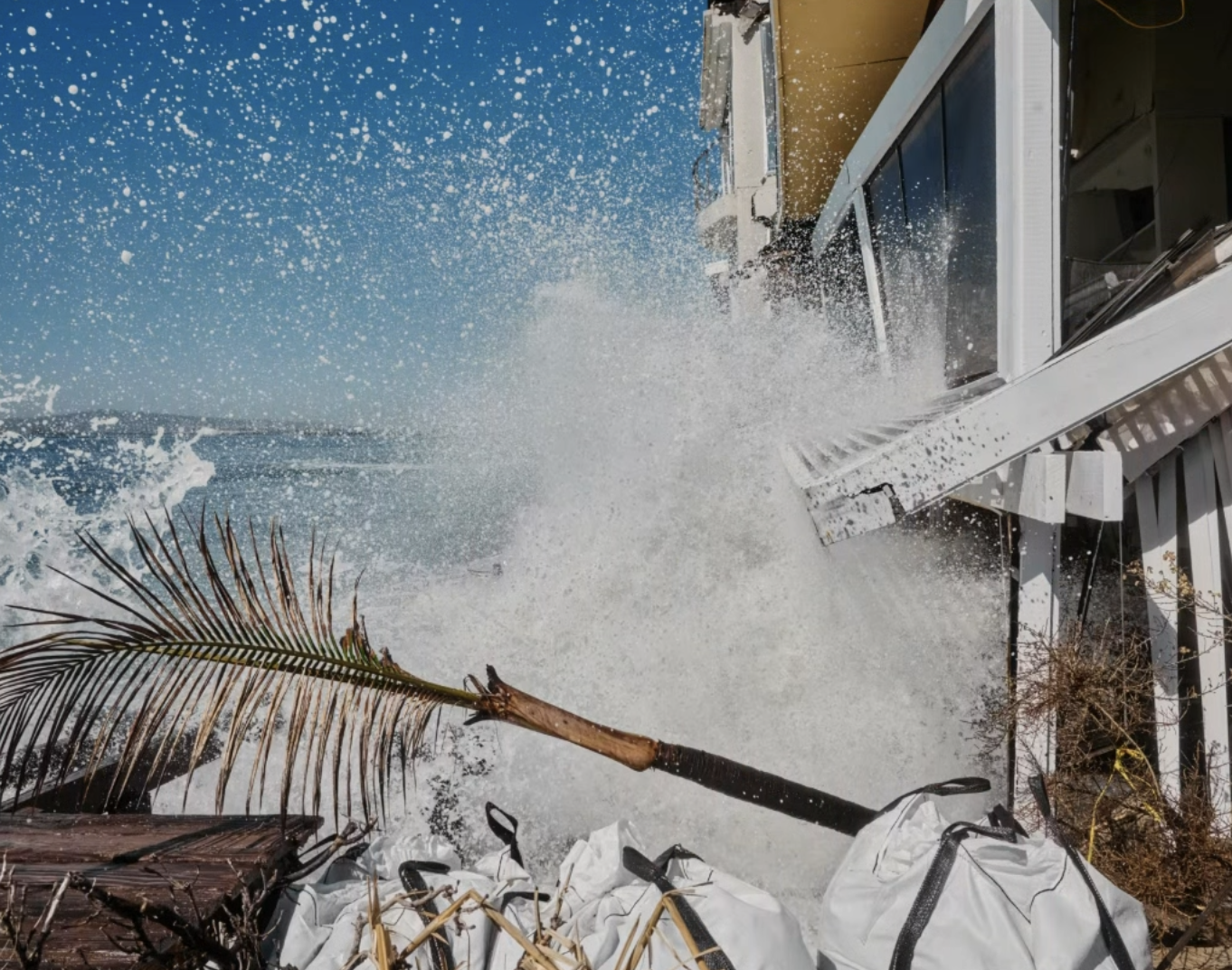
“Although the waves and the tide levels are receding slightly right now, very slightly, there still is ongoing coastal flooding, and this is not really going to get any better for months,” explained climate scientist Daniel Swain.
“In fact, it’s likely to get worse before it gets better,” he warned, adding that coastal areas of Northern California could begin experiencing comparable conditions during November and December.
Dangerous ocean conditions first affected Southern California’s coastal communities over Labor Day weekend, when the remnants of Hurricane Marie reached the region. Additional swells arrived toward the end of September following Hurricane Polo, with Tropical Storm Rachel subsequently contributing to the ongoing destruction.
The expected peak of the historic El Niño event is still months away, with its greatest intensity anticipated early next year. Nevertheless, three additional periods of seasonally elevated tides before the end of this year could produce further flooding and coastal erosion, according to Gallien, who also serves as an associate professor of environmental and civil engineering at UCLA.
“It’s a lot of water pointed at our coast,” she said.
‘Not built for this’
Curtis had already begun considering leaving his beachfront apartment before the disaster. Two weeks before the building was damaged beyond repair, he informed his landlord that he wanted to move out. Seven-foot waves associated with Hurricanes Marie and Polo had eroded portions of the boardwalk outside his home, raising concerns that conditions would deteriorate further as El Niño approached its expected January and February peak.
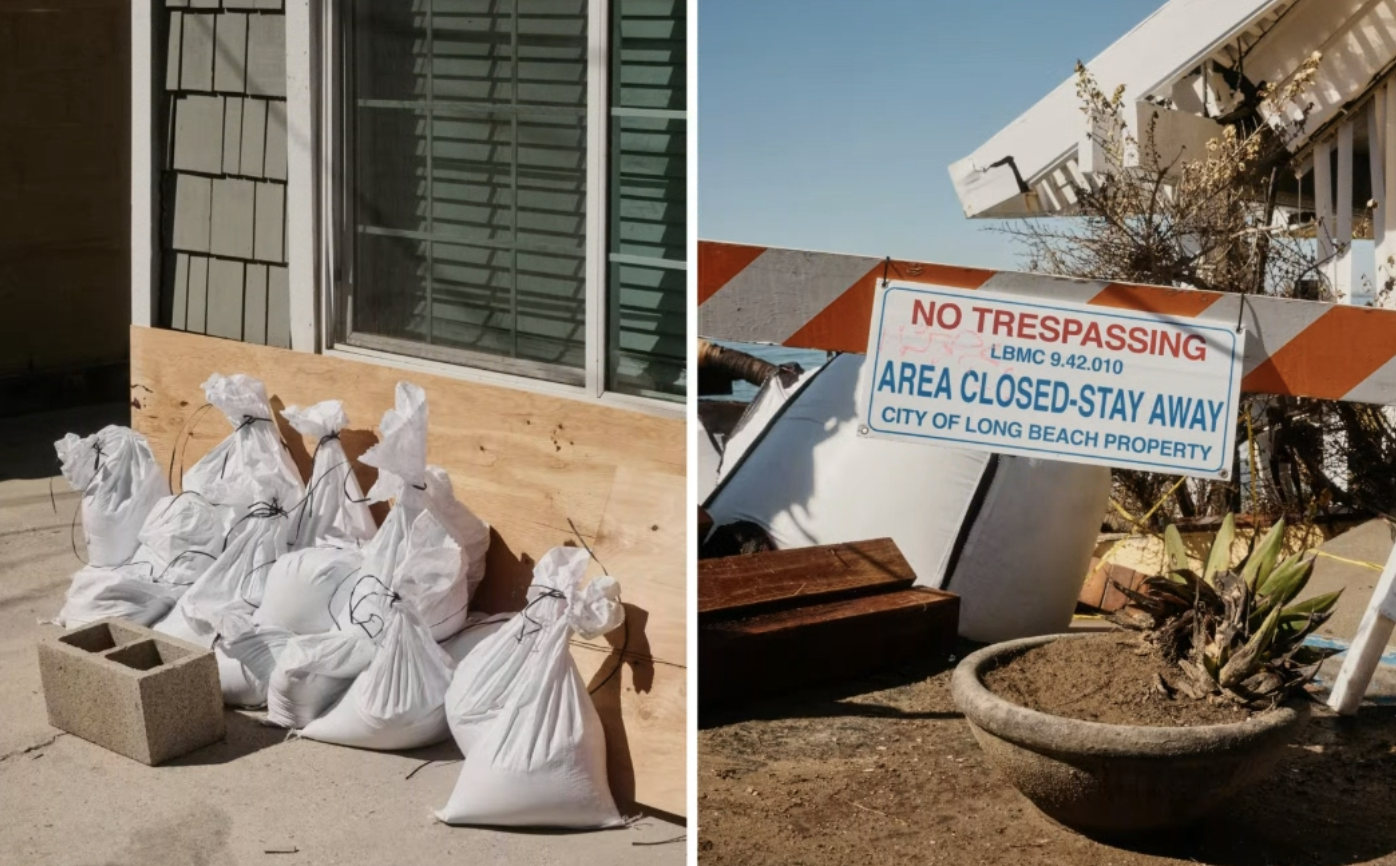
Earlier this month, municipal maintenance crews in Long Beach attempted to repair openings in the boardwalk’s protective wall using wooden boards and sandbags. Those temporary measures, however, proved incapable of withstanding the subsequent waves.
Long Beach Mayor Rex Richardson acknowledged the limitations of the city’s coastal defenses during a briefing with reporters last week, saying the existing “infrastructure was not built for this.” He indicated that repair operations would continue during periods when the tides were lower.
The accelerating destruction has intensified questions among local residents and coastal specialists about whether living in increasingly vulnerable waterfront communities will remain practical as climate conditions change.
“We love to live in these vulnerable places because they are beautiful,” Gallien explained. “It comes down to what is a risk tolerance for a given homeowner or a given community, or a given municipality. Can engineers protect structures?”
Determining whether engineering solutions can adequately protect coastal properties has become a pressing concern for residents, public officials and scientists. Although the current extent of shoreline destruction is historically significant, California has experienced comparable coastal hazards before. Earlier El Niño events, including those during the mid-1980s and late 1990s, produced erosion and flooding along sections of the Pacific Coast Highway.
Between Oct. 9 and Oct. 11, more than a dozen homes on the Long Beach Peninsula collapsed toward the ocean as the remnants of Tropical Storm Rachel generated offshore waves reaching heights of 17 feet. Authorities subsequently determined that eight structures containing 13 residences were too dangerous for occupants to enter.
Curtis remembered the pleasure of waking each morning to the gentle sound of waves. The entrance to his apartment opened directly onto a frequently used boardwalk where neighborhood residents and visitors gathered to enjoy the coastal scenery.
As the apartment building began collapsing, Curtis and his roommate hurriedly moved as many possessions as possible toward the rear of the property and into the garage, which remained dry and appeared structurally more secure. Curtis eventually escaped through his bedroom window with his dog, Lux, before reaching the opposite side of the street. That section of the neighborhood faces the bay and escaped damage during this particular storm.
Several days afterward, friends showed Curtis drone footage revealing that his favorite couch was floating in the Pacific Ocean.
“It’s just a couch,” he said. “I feel really bad for the neighbors.”
The neighboring three-story, single-family residence remained unoccupied this week. Its owners, a family of three, had departed on a cruise before the remnants of Tropical Storm Rachel devastated their property. A massive fracture extended from the building’s foundation to its roof, creating the possibility that the structure could split apart.
Curtis said he advised the family to continue enjoying their holiday because there was nothing they could do to reverse the destruction.
Attempts to contact the family for comment were unsuccessful.
On Thursday, Curtis’ roommate, who requested anonymity, hurried to load the few belongings he had managed to recover into a U-Haul truck while building inspectors and contractors observed nearby. According to the roommates, residents had been granted only two hours to retrieve whatever possessions remained accessible before demolition crews began the hazardous task of dismantling the damaged building.
Elsewhere along the street, Curtis moved through his familiar neighborhood visibly overwhelmed by the experience of surviving the disaster. He had worn the same clothes for several days and struggled to remember the date. The preceding days had become a blur of telephone conversations and emails involving his landlord, municipal authorities, relatives and insurance representatives.
Despite everything he had experienced, Curtis offered an immediate response when asked whether he was considering leaving the Long Beach Peninsula permanently.
“Not a chance,” he said. “But I am moving to the other side.”