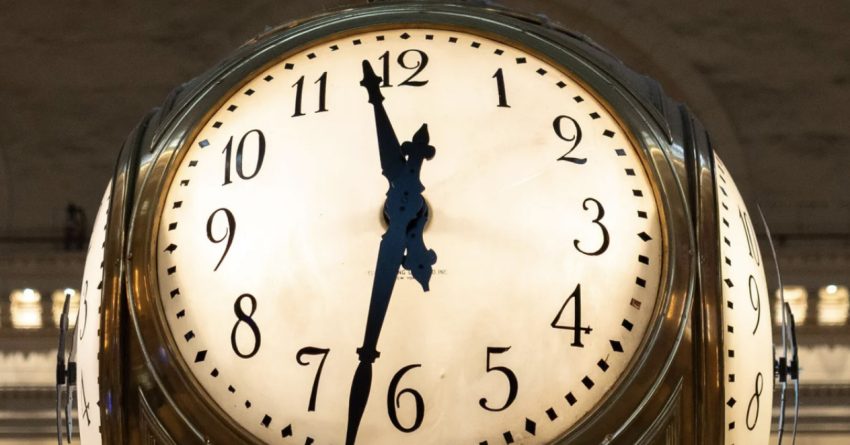
Millions of Americans will enjoy an extra hour of sleep this weekend as daylight saving time comes to an end for 2026. Across most of the United States, clocks will move backward by one hour at 2 a.m. on the first Sunday in November, marking the return to standard time.
The twice-yearly clock adjustment affects daily routines, sunrise and sunset times, and sleep schedules. Here’s everything to know about daylight saving time, why it exists, and when the clocks will change again.
What is daylight saving time, and why do we have it?
Daylight saving time is the annual period between March and early November when most of the United States sets clocks one hour ahead of standard time.
The adjustment effectively shifts an hour of daylight from the early morning into the evening during spring and summer, when daylight hours are naturally longer. When autumn arrives and daylight decreases, clocks return to standard time, allowing the sun to rise earlier in the morning.
For example, Boston residents will experience a noticeable difference this weekend. According to the National Weather Service, sunrise on Saturday will occur at 7:16 a.m., with sunset at 5:39 p.m. After the clocks change Sunday, sunrise will move to 6:17 a.m., while sunset will arrive much earlier, at 4:37 p.m.
The United States initially introduced daylight saving time in 1918 during World War I, following similar measures adopted in Europe to conserve fuel, according to the Congressional Research Service.
Congress repealed the nationwide requirement after the war, although individual states retained the option to continue adjusting their clocks.
The federal government revisited the idea during World War II and again during the energy crisis of the 1970s, introducing year-round daylight saving time in hopes of reducing energy consumption. Neither experiment became permanent.
Following World War II, states and municipalities were permitted to establish their own daylight saving schedules. It wasn’t until 1966 that Congress introduced standardized beginning and ending dates.
During the 1970s experiment, continuous daylight saving time was abandoned before it had even reached 10 months, largely because of concerns about dark winter mornings.
Will the U.S. move to year-round daylight saving time?
Lawmakers have renewed efforts to eliminate the twice-yearly clock change by making daylight saving time permanent nationwide.
Earlier in 2026, the Sunshine Protection Act advanced through Congress after passing the House of Representatives in July. The legislation subsequently moved to the Senate for consideration.
Under the proposal, states would also have the opportunity to opt out of daylight saving time entirely before the new rules took effect.
President Donald Trump has expressed support for the legislation and accused fellow Republican Sen. Tom Cotton of Arkansas of obstructing its progress.
The disagreement intensified when Trump published what he identified as Cotton’s cellphone number on social media, encouraging supporters of the proposal to contact the senator directly.
Cotton defended his opposition by pointing to previous attempts to maintain daylight saving time throughout the year.
He argued that Congress had already experimented with the approach before abandoning it “once Americans experienced absurdly late sunrises in the winter.”
The Senate now faces a limited window to act on the legislation.
Any measures still awaiting congressional approval will expire in early January when the newly elected members of Congress take office following Tuesday’s midterm elections.
If the Sunshine Protection Act fails to advance before the current congressional session ends, supporters will need to reintroduce the legislation and secure approval from both the House and Senate before it can reach the president’s desk.
Did the time change today?
No. The United States will not switch back to standard time until this weekend.
In 2026, daylight saving time ends during the overnight hours following Halloween, providing an additional hour for people attending late-night costume parties or those hoping to catch up on sleep afterward.
However, the change may prove less enjoyable for parents with young children.
Moving clocks backward can temporarily interfere with children’s established sleeping patterns, potentially causing earlier wake-up times and requiring several days for families to adjust.
What day and time does daylight saving time end in November 2026?
Daylight saving time officially concludes at 2 a.m. local time on Sunday, November 1, 2026.
At that moment, clocks in participating states will move backward to 1 a.m., effectively repeating one hour.
Since 2007, Americans have made the autumn adjustment on the first Sunday of November.
The current schedule was established through legislation passed in 2005, which extended daylight saving time by moving its ending date from the final Sunday of October to the first Sunday of November.
Do we lose or gain an hour when daylight saving time ends?
Most Americans will gain one additional hour when daylight saving time concludes.
This autumn adjustment reverses the change made in March, when clocks were advanced by one hour at the beginning of daylight saving time.
Although the extra hour offers an opportunity for additional rest, it also means evenings will become darker earlier.
When will daylight saving time start again in 2027?
Unless federal lawmakers change the current system, daylight saving time will begin again on Sunday, March 14, 2027, at 2 a.m. local time.
Clocks will move forward by one hour, returning most of the country to daylight saving time.
The annual spring adjustment takes place on the second Sunday of March.
In 2027, that date falls on March 14 because the month begins on a Monday. By comparison, daylight saving time started on March 8 in 2026.
The spring starting date was also modified in 2007 as part of efforts to lengthen the daylight saving period.
Before those changes, Americans typically moved their clocks forward on the first Sunday of April.
Which states don’t do daylight saving time?
Although most states participate in daylight saving time, Hawaii and most of Arizona do not observe the seasonal clock changes.
One important exception is the Navajo Nation, which extends into parts of Arizona, New Mexico and Utah.
The Navajo Nation follows daylight saving time to maintain consistent schedules across its communities in neighboring states, according to the tribal government.
Several U.S. territories also remain on standard time throughout the year.
These include American Samoa, Guam, the Northern Mariana Islands, Puerto Rico and the U.S. Virgin Islands.
Residents in those locations do not need to adjust their clocks when daylight saving time begins or ends elsewhere in the country.
Will my phone change for daylight saving time automatically?
Most modern smartphones should adjust their clocks automatically when daylight saving time ends, provided their date and time settings are configured for automatic updates.
That means many Americans will wake up Sunday morning to find their phones already displaying the correct standard time.
Apple, Google and Samsung provide online instructions explaining how to verify automatic date and time settings on their devices.
Wireless service providers, including Simple Mobile and Straight Talk, also offer guidance for customers who want to confirm that their phones are configured correctly.
People who use traditional alarm clocks, wall clocks or other devices without automatic time synchronization may need to move those clocks backward manually.
For most Americans, the November 1 adjustment will mean an extra hour overnight, earlier sunrises and darker evenings as the country enters the final months of 2026.