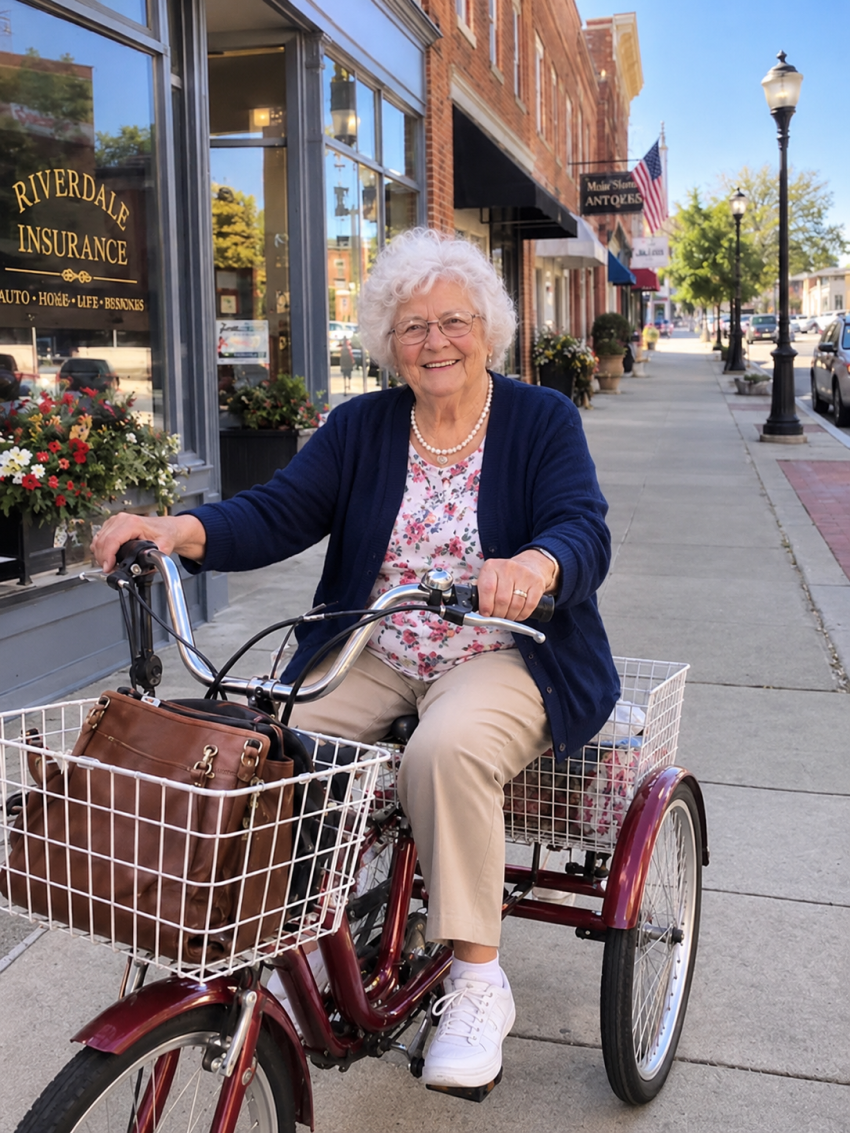
My son held his hand out across my birthday cake, palm up. The way you hold out your hand to a child who has something in her mouth she shouldn’t.
“Mom,” Brian said. “I need the keys.”
We were at the supper club out on the highway. The one with the relish tray on every table and a painting of a lake on the wall behind the bar. It was the third Sunday in May.
I’d turned seventy-six years old at 6:10 that morning. My mother always kept track of it to the minute.
My daughter-in-law, Kim, was staring very hard into her coffee cup.
“The keys to what?” I said.
I knew. I just wanted to hear him say it.
“The Buick.”
“You drove me here, Brian. The Buick is in my carport.”
He didn’t answer that. He just kept his hand right where it was, palm up over my cake.
I noticed his hand wasn’t quite steady. I filed that away. The way I used to file away the sound of a caller’s breathing when I worked the switchboard.
“It’s for your own good,” he said. “After the mailbox.”
Two weeks before, in a hard rain, I’d swung wide around a delivery truck parked on Cedar Street. My right fender clipped the Hendersons’ mailbox. It leaned over afterward like an old man with a bad hip.
I went to the hardware store that same afternoon. I bought them a brand-new mailbox for thirty-eight dollars. I stood in the drizzle while Jeff Henderson screwed it onto the post and told me not to give it another thought.
Then I called my son and told him about it myself. Because I’ve never once in my life hidden a thing from that boy.
That was my mistake. Telling him.
“One mailbox,” I said.
“This time it was a mailbox.”
“In fifty-eight years of driving.”
“Mom.”
He lowered his voice. The Schmidts were two tables over with their grandchildren.
“It’s done,” he said. “I didn’t want to do this here. But I didn’t know how else to do it. The Buick’s already sold.”
I set my fork down on the edge of my plate.
It made a small, clear sound.
“Sold,” I said.
“A man from Janesville. He came at four-thirty this afternoon. Kim let him into the carport with the spare key.”
He reached into his sport coat and laid an envelope on the tablecloth beside my cake.
“Forty-two hundred dollars. Cashier’s check. Made out to you. Every cent of it’s yours.”
Adrian Hawthorne is a celebrated author and dedicated archivist who finds inspiration in the hidden stories of the past. Educated at Oxford, he now works at the National Archives, where preserving history fuels his evocative writing. Balancing archival precision with creative storytelling, Adrian founded the Hawthorne Institute of Literary Arts to mentor emerging writers and honor the timeless art of narrative.