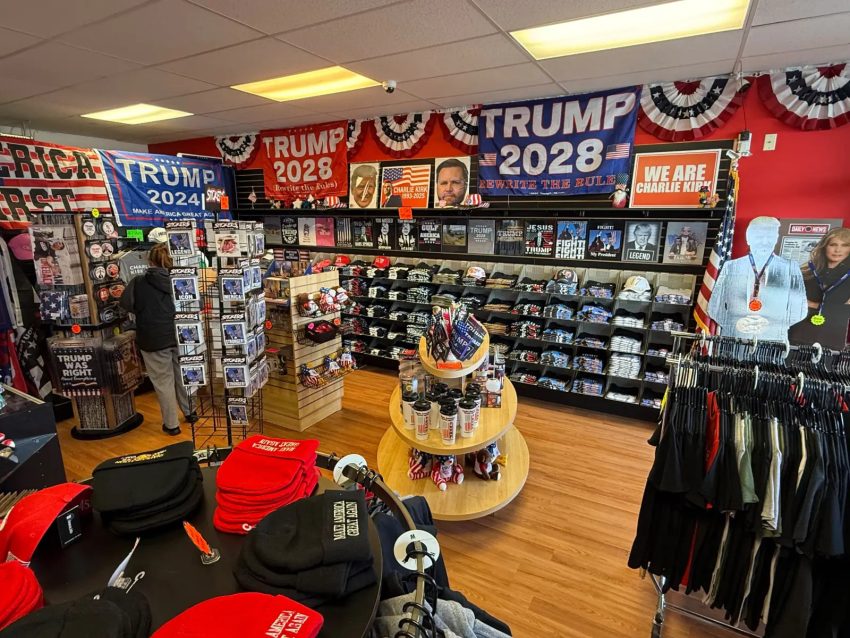
BENSALEM, Pa. — When a local store specializing in Donald Trump merchandise announced plans to shut down earlier this year, Wes Alker, a devoted Trump supporter and retired automotive mechanic, visited to revisit old memories and take advantage of clearance discounts. Among the reduced items were “Trump Won” baseball caps priced at $9.99 and Trump-themed swimming pool floats selling for $19.99.
Retail outlets dedicated to Trump merchandise began appearing during his 2016 presidential campaign. However, with the president now serving his second and constitutionally final term, shop owners say enthusiasm among customers has weakened, leaving fewer reasons for supporters to continue purchasing campaign-related products.
At least four Trump merchandise stores have permanently closed this year. Meanwhile, MAGA Mall, a major online seller and wholesale distributor, reports that sales of MAGA-branded products have declined by 30% compared with presidential election years when Trump appears on the ballot.
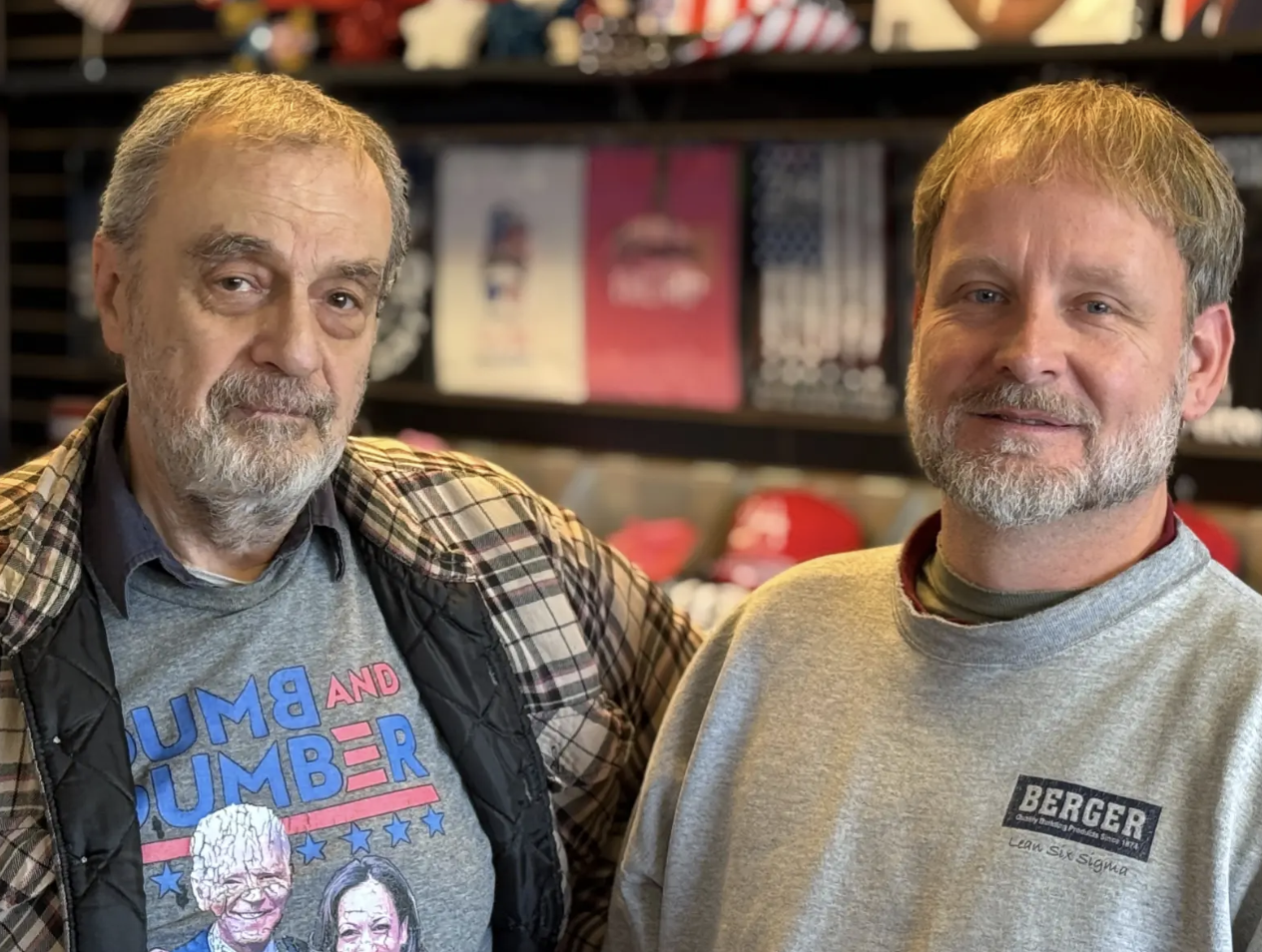
“He’s no longer a viable business model for entrepreneurs because he has peaked,” said Alker, who was wearing a gray T-shirt featuring former President Joe Biden and former Vice President Kamala Harris alongside the words “Dumb and Dumber.”
Trump’s approaching departure from electoral politics is not the only factor contributing to weaker consumer demand. By the time the Bensalem location closed its physical storefront, while continuing online operations, the president’s average approval rating had declined from 50% at the beginning of his term to 44%.
Nine months afterward, when Bill Hays closed his Trump-themed superstore near Knoxville, Tennessee, the president’s approval rating had dropped another five percentage points.
Hays attributed some of the decline in merchandise sales to dissatisfaction with administration policies, including the extensive federal workforce reductions carried out through DOGE. He observed a noticeable shift in customer behavior, with increasing numbers of buyers requesting shopping bags rather than immediately wearing their newly purchased Trump apparel.
“People were not wearing their colors, so to speak, like they did before the (2024) election,” said Hays, 80.
Business initially flourished when Hays launched his store in April 2024. He recalled one particularly busy day when approximately 80 customers waited in a line extending outside the entrance, while monthly revenue eventually reached $200,000. By September, when the location shut down, monthly sales had plunged to approximately $20,000.
“After the inauguration, I think a lot of people felt that their job was done,” Hays explained. “They didn’t have to promote MAGA or Trump.”
Hays continues operating another Trump merchandise outlet in Gatlinburg, a popular tourist destination in Tennessee. He plans to evaluate its performance during the Christmas shopping season before determining whether the business should remain open.
Stores devoted entirely to Trump merchandise represent an unusual development in American political retail. Previous presidents with enthusiastic supporters, including Ronald Reagan and Barack Obama, did not generate comparable networks of dedicated physical merchandise stores across Republican- and Democratic-leaning states. Hays believes Trump’s commercial appeal stems from his background as a salesman and his ability to communicate messages that resonate with his audience.
Ron Solomon, who serves as president of MAGA Mall, estimates that approximately 20 businesses specializing in Trump-related merchandise remain operational.
In Myrtle Beach, retailer Rick Kligman continues selling Trump products from two storefronts but is actively clearing older inventory. His promotions include surprise merchandise bags containing approximately $40 worth of products offered for just $9.99. Kligman is concerned about the upcoming midterm elections, believing that Democratic victories in both the House and Senate could further reduce demand among less committed Trump supporters.
“I don’t want to be sitting holding thousands and thousands of dollars of Trump merchandise and absolutely no possibility of selling it,” said Kligman, 69.
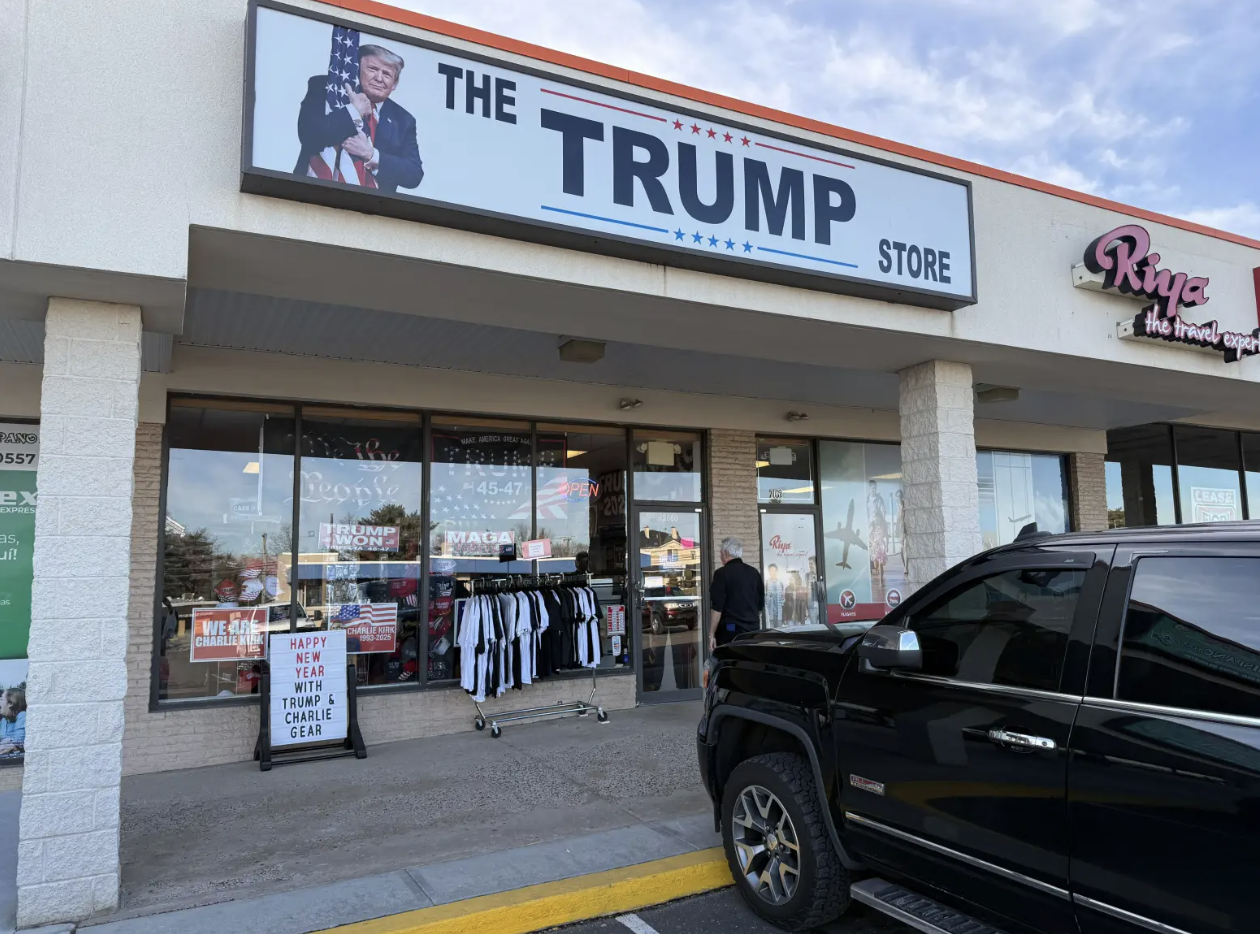
With Trump’s age and constitutional term limits restricting his future political prospects, merchandise retailers are increasingly expanding their product ranges beyond his personal branding. Many are introducing broader patriotic merchandise, including caps displaying the phrase “We the People.”
Solomon considers this shift a predictable stage in the evolution of the political merchandise industry.
Trump will eventually withdraw from the national political spotlight, and Solomon believes the market for products bearing his name will gradually diminish unless another member of his family assumes a similarly prominent public role. Without such a successor, he predicts that the Trump merchandise business “will fade away.”